Does Breastfeeding Cause Cavities in Toddlers?
Last Updated: June 24, 2025
🕒 6 min read

✅ Intro
Somewhere along the way, breastfeeding got blamed for cavities.
Not because the evidence pointed there — but because it was nearby when the damage showed up.
That’s how medical myths are born:
two things happen at the same time, someone panics, and logic quietly leaves the room.
🚀 Short Answer
No — breastfeeding does not cause tooth decay in babies.
This myth pops up regularly in dental offices, usually right after a worried parent hears the word “cavity” and looks for something to blame. Breastfeeding is an easy target.
Here’s the reality: cavities don’t come from breastfeeding — they come from sugar exposure and timing.
Most kids today consume sugars early and often, frequently hidden in bottles, snacks, and “healthy” foods. Combine that with newly erupted, vulnerable baby teeth, and decay shows up.
Breast milk, on the other hand, does the opposite.
It actively protects against tooth decay. It contains antibodies that fight cavity-causing bacteria, and the mechanics of breastfeeding send milk straight to the throat — not bathing the teeth.
❗Breastfeeding has well-documented health benefits. Stopping it because of this myth would be a medical mistake.
🤔 Why This Myth Happened
Baby teeth usually start erupting between 6 and 12 months, with all 20 present by around age 3.
Coincidentally — and this is where confusion begins — this is also when solid foods, bottles, and sippy cups enter the picture.
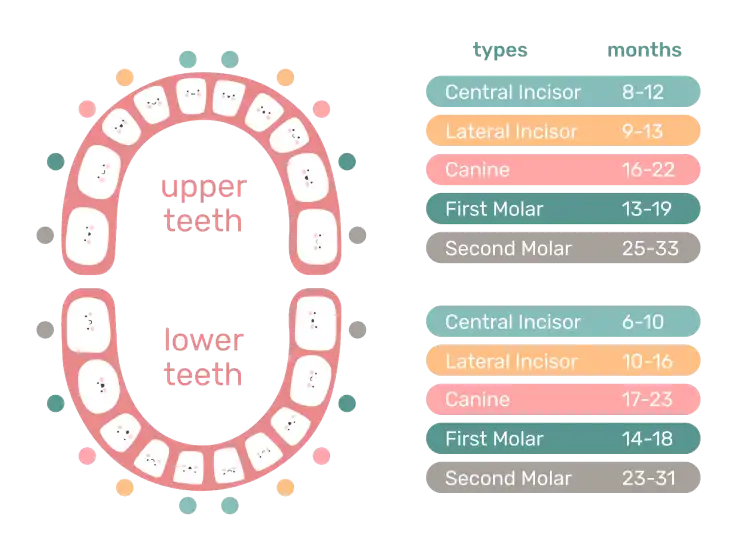
Freshly erupted baby teeth are softer and less mineralized than adult teeth.
They need time to harden. During that window, frequent sugar exposure is exactly what cavity-causing bacteria are waiting for.
Now add these three overlapping facts:
- First teeth appear: 6–12 months
- Sugary foods and drinks appear: 6–12 months
- Breastfeeding continues: often 1 year or longer
It’s easy to connect dots that don’t belong together.
But in reality, breastfeeding just happens to be present — it isn’t the cause.
In well over 90% of cases, cavities are driven by diet.
Often a diet with sugars parents don’t even realize are there.
👎 Why This Myth Is Wrong
Let’s rewind — way back — to a time before bottles, juice boxes, and snack aisles.
Breastfeeding was the only option.
When anthropologists examined prehistoric skulls, they found very little tooth decay in infants and toddlers.
So what changed?
🍭 Sugar — The Actual Villain
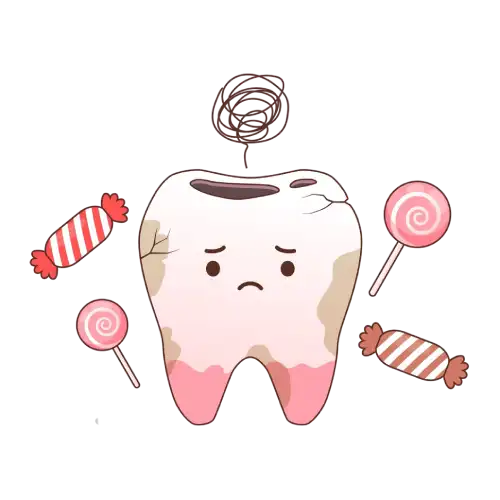
Modern diets are saturated with sugar — often disguised as “natural,” “organic,” or “kid-friendly.”
Juices, flavored yogurts, snacks, sauces — even baby foods — quietly feed cavity-causing bacteria all day long.
Breast milk didn’t change. Our diet did.
🍼 The Bottle Problem

Bottles filled with sweet liquids — especially at night — allow sugar to pool around teeth for hours.
Saliva slows down during sleep, bacteria feast, enamel loses.
Breastfeeding doesn’t work like that.
The tongue forms a seal, milk flows directly to the back of the mouth, and a swallow reflex kicks in.
Teeth aren’t soaking — they’re bypassed.
🧬 Breast Milk Protects, Not Harms
Yes, breast milk contains lactose.
It also comes with a built-in security system:
- 🛡️ Lactoferrin – Starves bacteria by binding iron
- 🧪 Immunoglobulins – Neutralize harmful microbes
- 💧 Bioactive enzymes – Support a healthy oral microbiome
Nutrition plus defense. Evolution did its homework.
🧠 A Quick Thought Experiment

If breastfeeding caused cavities, mammals would be in dental crisis.
They aren’t.
Breastfeeding is biologically normal.
Cavities are not — unless we introduce something unnatural.
And in modern life, that “something” is usually sugar.
🪥 Tips to Prevent Tooth Decay While Breastfeeding
🚫 Avoid these cavity accelerators:
- Never let a child sleep with a bottle containing sweetened liquids.
- Limit sticky, slow-dissolving sweets like lollipops or gummies.
- Avoid sugar before bedtime — dry mouth + sugar is bacterial heaven.
- Never dip pacifiers in honey or sugar.
🤓 Cavities care less about quantity and more about frequency.
Eating sugar once is bad. Sipping or nibbling all day is worse.
✅ Instead, do this:
- Breastfeed on demand — for as long as it works for you and your child.
- Introduce solid foods smartly, with minimal added sugars.
- Offer water instead of juice.
- Clean the mouth early — wipe gums, brush teeth as soon as they appear.
- See a pediatric dentist by age 1 — prevention beats repairs.
✅ Bottom Line
Breastfeeding does not cause cavities.
It can actually help protect against them — when paired with good hygiene and a low-sugar diet.
Blaming breast milk misses the point and distracts from the real causes of early childhood decay.
So don’t quit breastfeeding because of a myth.
It’s one of the best things you can do for your child’s overall health — teeth included.

❓ FAQ: Breastfeeding and Tooth Decay
Can breastfeeding cause tooth decay in toddlers?
Can nursing your baby to sleep cause tooth decay?
Can children’s teeth get messed up if they breastfeed for too long?
Can milk damage toddler teeth?
Does prolonged breastfeeding affect dental caries?
What is the most common reason for tooth decay in a toddler?
Is nursing bad for baby teeth?
Does prolonged breastfeeding cause cavities?
Can you get cavities filled while breastfeeding?
What happens to your teeth while breastfeeding?
Do breastfed babies get teeth earlier?
Do I need to pump and dump after getting a cavity filled?
Do I need to tell my dentist I'm breastfeeding?
How long should I wait to breastfeed after dental work?
Is breastfeeding protective against cavities?
How can I protect my child’s teeth while breastfeeding?
Can breastfeeding cause yellow teeth?

Author: DMD Alexander K.
Doctor of Dental Medicine on dental topics. Facts first. Drama optional.
Learn more on the About page.