Why Do My Gums Bleed When I Brush My Teeth
Last Updated: March 21, 2026
🕒 6 min read

Written by DMD Alexander K.
Doctor of Dental Medicine, 10+ years of clinical experience, focused on preventive dentistry and patient education. Learn more on the About page.

Table of Contents
Intro hook 🧠
You didn’t suddenly “start bleeding.”
You just finally hit the spot that was already in trouble.
The real question isn’t why it bled today — it’s why it didn’t bleed yesterday.
🦷 Part of our Adult Oral Health Guide
This article is part of our Adult Oral Health Guide, where we break down the most common dental problems and how to actually deal with them.
Short Answer 🚀
If your gums bleed when you brush, it usually means one thing:
inflammation — also known as gingivitis.
Not the end of the world.
But also not something to ignore.
What Just Happened in Your Sink? 🧐
All of a sudden, you’re brushing like you did yesterday… and then — red foam in the sink.
Not exactly the kind of morning you were aiming for.
It looks worse than it is.
In most cases, it’s fixable — and actually a useful signal.
Why?
First:
You’re brushing your teeth.
That already puts you ahead of a surprising number of people.
Second:
You probably reached a spot you’ve been missing for a while.
That’s where the bleeding starts — not because you did damage,
but because you finally found the problem.
So yes, it looks bad.
But in most cases, it means you’re doing something right — just not everywhere.
The Real Cause (No Mystery Here) 🦠
That blood? It’s your gums reacting to irritation.
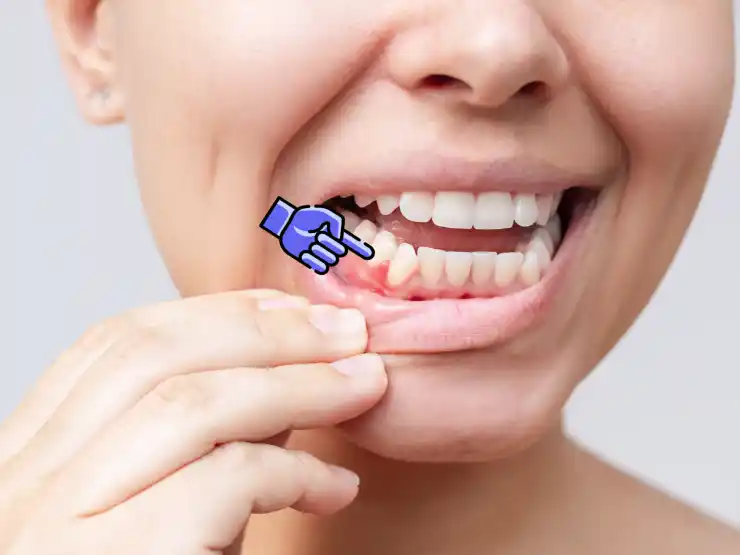
The inflamed gum area is redder, softer, and more likely to bleed when touched or brushed. Healthy gums are usually light pink and firm.
In dental language: gingivitis.
In plain language: your gums are inflamed.
And the main cause?
👉 Dental plaque
A mix of bacteria, food leftovers, and saliva sits right where the tooth meets the gum.
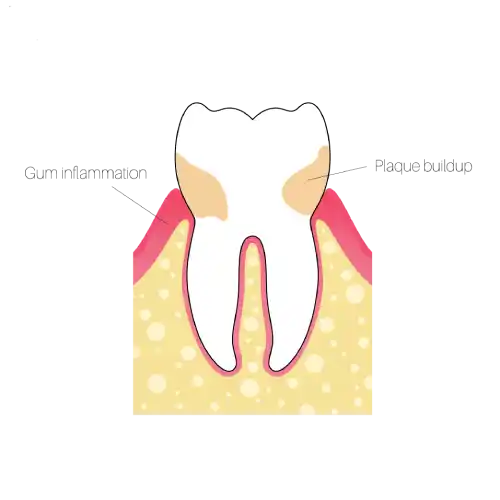
You can sometimes feel the dental plaque with your tongue as a non-slippery film on your teeth, especially near the gum line. If you are careful, you can collect it with your fingernail and see it as a sticky, sometimes yellowish substance.
Even if you brush every day, plaque can still hide.
Why?
- You have 28–32 teeth
- Each tooth has 4–5 surfaces
- Some spots are awkward, tight, or just easy to miss
Add your unique tooth alignment, and suddenly you’ve got
blind spots where bacteria throw a small party.
So no — this doesn’t mean you’re doing a bad job.
It means perfect cleaning is harder than it looks.
Where to Look First 🔍
The usual suspect?
👉 The gum triangle between teeth
That small space most people ignore.
What to look for:
- 🔴 Redder than surrounding gums
- 📈 Slight swelling
- 🩸 Bleeding when touched or brushed
Healthy gums are usually light pink and firm.
Inflamed gums? Softer, darker, and much easier to provoke.
How to Fix It (Yes, You Have to Go Back In) ⚔️
Now comes the part most people get wrong.
Your instinct says:
“Don’t touch it — it’s bleeding.”
Wrong move.
👉 You need to clean it more, not less.
🪥 Level 1 — Toothbrush
Start simple.
- Use a soft toothbrush
- Focus more on the bleeding area
- Replace your brush if it’s worn out
Don’t scrub like you’re cleaning a pan.
Be precise, controlled, and consistent.
🔩 Level 2 — Interdental Brushes
This is where things actually change.

- Pick the right size (snug, not forced). The best way - choose 3 sizes and try them all. You can’t find a one size to fit all your interdental spaces.
- Use it daily — ideally after brushing
- Gently clean between teeth
- Yes — it will bleed more at first
That’s expected.
👉 Important:
Avoid flossing here in the beginning.
If done poorly, it can push debris deeper into the gum.
Interdental brushes clean from the side — much safer and more effective in this situation.
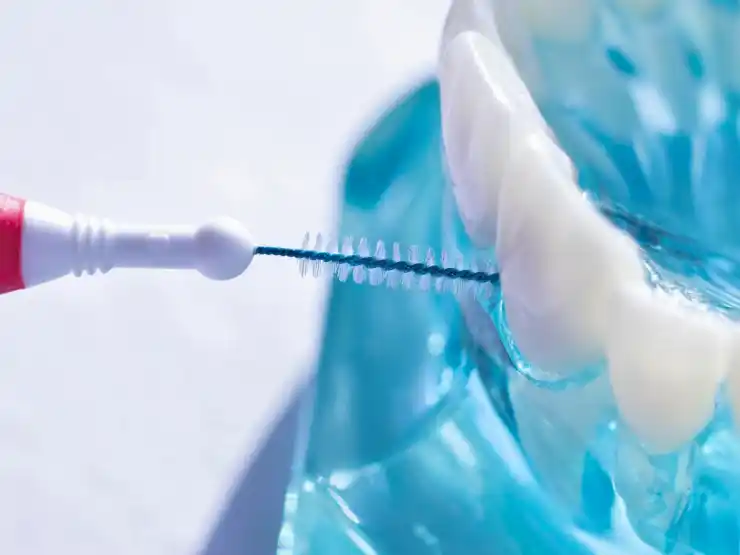
Carefully try to find the right angle to insert the interdental brush between the teeth, often it seems there is no space, but with the right angle and a gentle push, it can fit and clean the area effectively.
🧪 Level 3 — Add Chlorhexidine Gel
If you want to speed things up:
- Apply chlorhexidine gel on the interdental brush
- Target the inflamed area directly
This helps reduce the bacterial load faster. It is a specialized product, so maybe you need to ask the pharmacist or your dentist for a recommendation. In general, it’s safe and effective for short-term use, but it’s not a long-term solution.
What to Expect ⏳
At first, it feels like it’s getting worse.
More blood.
More sensitivity.
Then — slowly — it stops.
That’s your sign, you’re winning.
Goal: 👉 Brush + interdental cleaning → no more bleeding
Usually takes a few days with consistent effort.
Once it’s gone:
- Go back to normal brushing
- Just give that area a bit more attention
No need to turn this into a full-time job.
When to Stop DIY and See a Dentist 👨⚕️
If:
- Bleeding is everywhere, not just one spot
- It doesn’t improve after a few days
- Something feels “off” compared to what you read here
👉 Go see a dentist.
Not sure how to pick one?
Check this: 👉 How to Find a Good Dentist: 10 Trustworthy Signs
No article replaces an actual exam.
Less Common (But Real) Causes ⚠️
Most cases = simple gingivitis.
But sometimes bleeding gums are just a symptom.
Possible causes include:
- Medications
- Allergic reactions
- Specific infections
- Skin-related conditions (dermatoses)
- Hormonal changes (puberty, pregnancy)
- Oral contraceptives
Rare — but not impossible.
So if something doesn’t fit the usual pattern,
don’t guess. Confirm.
Bottom Line 🧠
Bleeding gums don’t mean disaster.
They mean something is irritating them.
Most of the time:
- It’s plaque
- It’s local
- And you can fix it yourself
But only if you don’t ignore it.
Because today it’s bleeding gums.
Tomorrow — it might be something worse.
Related Articles 🔗
- 👉 Why Does My Tooth Hurt When I Drink Cold Water?
- 👉 Do You Really Need a Dental Crown?
- 👉 Canker Sores vs Cold Sores – What’s the Difference?
- 👉 How to Find a Good Dentist: 10 Trustworthy Signs
Quick FAQ: Bleeding Gums & Gingivitis ❓
What are the first signs of gingivitis?
What happens if gingivitis goes untreated?
What does stage 1 gum disease look like?
Does gingivitis go away?
Can I reverse gingivitis at home?
How to tell if your gums are receding?
How do you fix gum bleeding?
Can mouthwash help with gingivitis?
About the Author: DMD Alexander K.
Doctor of Dental Medicine with clinical experience treating adults and children. This site focuses on practical prevention, symptom education, and helping patients make informed decisions.
Learn more on the About page.