2-Year Molar Teething:
Symptoms & How Long It Lasts
Last Updated: May 21, 2026
🕒 11 min read

Written by DMD Alexander K.
Doctor of Dental Medicine, 10+ years of clinical experience, focused on preventive dentistry and patient education. Learn more on the About page.
Table of Contents
The First Teeth Were a Warmup 🦷
You survived the first round of teething. Lower incisors. Upper incisors. A few molars somewhere in the middle. You figured out what worked. You had a system.
And then the 2-year molars showed up.

If you’re reading this at midnight with a toddler who hasn’t slept properly in a week, congratulations — you’ve found the right article.
2-year molars are the last baby teeth to erupt. They’re also the largest, the deepest, and the most disruptive. Not because nature is cruel. Because molars are physically bigger than incisors, they put more pressure on the gum tissue during eruption, they take longer to fully emerge, and — unlike the early teeth — your child is now old enough to fully communicate how unhappy they are about all of it.
This article covers what’s actually happening, what symptoms are specific to molar eruption, how long this lasts, and what you can do that actually helps.
When Do 2-Year Molars Come In? ⏱️
The second molars — sometimes called 2-year molars — typically erupt between 23 and 33 months.
That’s a 10-month window. Which means your 20-month-old could already be starting, and your 2.5-year-old might still be mid-process. Both are normal.
They don’t come in all at once. Usually one or two start breaking through, then there’s a break, then the others follow. The full set of four can take several months to fully emerge.
For full eruption timing across all baby teeth, the interactive teething chart shows exactly when each tooth typically arrives and what comes next.
Why 2-Year Molars Hit Different 😤
Here’s what most teething articles skip over.
The first molars (around 12-16 months) were bigger than the incisors. That was already an upgrade in discomfort. Second molars are bigger still. They have four cusps instead of the incisors’ single edge. The surface area pushing through the gum is significantly larger. More surface = more pressure = more pain.
There’s also a timing problem. Early teething happened when your child was too young to understand what was happening or articulate it clearly. The 2-year molars arrive when your child is developmentally aware enough to know something is wrong, emotionally equipped to have strong opinions about it, and verbally capable of telling you — repeatedly — that their mouth hurts.
Also, second molars erupt in the back of the mouth where you can’t easily see them. Parents often spend a week assuming something else is wrong before they think to look further back than the existing teeth.
2-Year Molar Teething Symptoms 🔍
Not every symptom you read about online is specific to molar teething. Most lists just recycle the same generic teething symptoms that apply to any tooth.
Here’s what’s actually specific to molar eruption:
Intense gum swelling at the back of the mouth
Run a clean finger along your toddler’s upper and lower gums, past the existing teeth, toward the back. If there’s a raised, firm, swollen ridge where no tooth has appeared yet — that’s a molar preparing to break through. It can feel almost like a hard lump under the gum.
Chewing on everything — especially flat surfaces
Incisors make babies bite edges. Molars make toddlers press flat objects against their back gums. Books. Toys. Your hand. Anything with a flat surface they can press their jaw against. This is them self-managing the counter-pressure.
Excessive drooling (yes, again)
You thought drooling was a first-year problem. Second molars can restart it. The same mechanism — increased saliva production during gum irritation — applies at any age. Drool rash can also reappear. If it does, the same management applies as before — if you want a refresher, the teething rash article covers exactly what to do.
Ear pulling and cheek rubbing
The nerves serving the back molars are shared with the ear canal. Molar pain can refer to the ear. Your toddler isn’t necessarily getting an ear infection — they may be locating the pain incorrectly. That said, see below about telling the difference.
Increased irritability, especially in the afternoon and evening
Molar discomfort tends to worsen as the day goes on. There’s no magic explanation — fatigue lowers pain tolerance, distractions decrease, and lying down (both for naps and at night) increases blood pressure in the gums slightly. Afternoon meltdowns that seem disproportionate to the situation are often molar-related.
Disrupted sleep
This one deserves its own section.
Why 2-Year Molar Teething Is Worse at Night 🌙
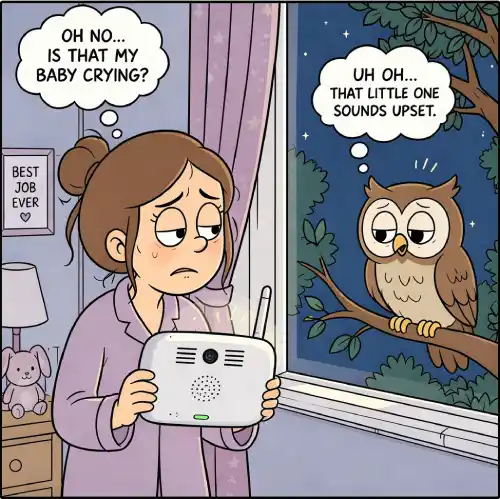
Parents ask this constantly. Why is everything fine at the playground and catastrophic at 11pm?
Three things are happening:
1. No distraction. During the day, activity competes with the pain signal. At night, in a dark quiet room with nothing else to focus on, the pain is the only input. The same nerve signal that was background noise at the park is now the main event.
2. Cortisol drops. The body’s natural anti-inflammatory hormone peaks in the morning and drops overnight. Lower cortisol = less natural pain buffering = more perceived discomfort.
3. Horizontal position. Lying flat increases blood flow to the head and gums. More blood pressure in an already inflamed gum tissue = more throbbing.
This is why the same child who ate lunch fine and played all afternoon is completely inconsolable at midnight. They’re not being dramatic. The pain genuinely is worse.
How Long Does 2-Year Molar Teething Last? 📅
The part nobody wants to hear.
A single molar can take 1 to 8 weeks from the first symptoms to fully breaking through the gum surface. Full emergence — where the cusp is completely through and the gum heals around it — takes longer.
All four second molars don’t erupt simultaneously. They stagger. Which means the total molar teething period, from when symptoms first start to when the last one is fully through, can span anywhere from 2 to 6 months.
The worst discomfort usually occurs in the 48–72 hours before each tooth breaks through the gum surface. Once a tooth is through, the pressure drops dramatically and the child usually has a good few days before the next one starts.
So if your toddler has a terrible week, then a decent week, then a terrible week again — that’s the normal pattern. Not regression, not illness. Just the next molar starting its process.
What Actually Helps 🛠️
Let’s separate what works from what gets sold.
Cold pressure — specifically designed for molars
Regular teething rings are shaped for front-tooth biting. For molar teething you want something that reaches the back gums. Silicone molar teethers — the ones shaped like a P or with a long arm that reaches the back — are genuinely more effective than standard teething toys for this stage. Chill them in the fridge (not the freezer — too hard, can bruise gum tissue).
A cold, damp washcloth folded thickly also works. Let them chew on it. It’s not glamorous, but it’s effective.
Pain relief medication when needed
For significant discomfort — especially at night — age-appropriate ibuprofen or acetaminophen at the correct dose is appropriate and safe. Ibuprofen has the added anti-inflammatory component which is particularly useful for molar teething since gum inflammation is the primary issue.
Don’t give it preventively around the clock. Use it when the child is clearly distressed and unable to sleep or eat. If you’re needing it daily for more than a week, worth mentioning to your pediatrician.
Food as therapy
Cold foods — yogurt, chilled fruit puree, cold cucumber sticks — apply the same counter-pressure and cold relief as teething toys but are more interesting to a toddler. For a child who’s eating solid food, chewing itself provides the counter-pressure they’re instinctively seeking.
What doesn’t help
Teething gels with benzocaine — not recommended for children under 2, and the numbing effect washes away in seconds from saliva anyway. Amber teething necklaces — no evidence they work, real risk of strangulation and choking. Not worth it. Homeopathic teething tablets — no evidence of efficacy. Some have caused harm due to variable belladonna content. Skip.
Is It Teething or Something Else? 🤔
This is the question parents get wrong the most.
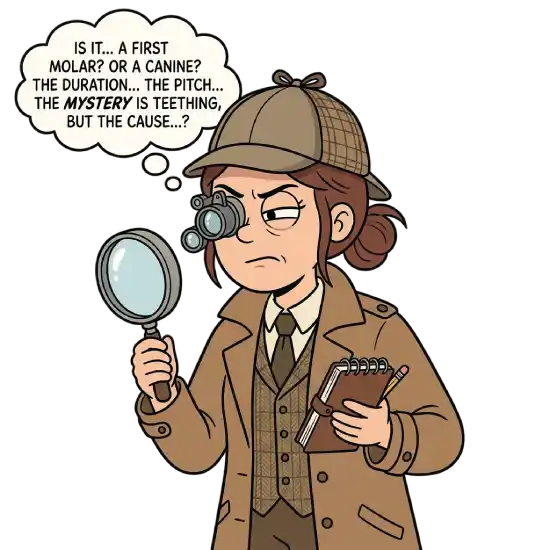
Molar teething symptoms overlap with several other conditions. Here’s how to tell them apart:
Molar teething vs. ear infection
Both cause ear pulling and disrupted sleep. The key difference: ear infections cause fever above 38°C (100.4°F) and are painful when you press on the tragus (the small cartilage nub at the front of the ear canal). Molar teething doesn’t cause significant fever and pressing on the tragus doesn’t increase distress.
If fever is above 38°C — it’s not teething. The does teething cause fever article explains this in full detail, but the short version is: teething doesn’t cause real fever. If your child has one, something else is causing it.
Molar teething vs. general illness
Teething lowers immunity slightly because the gum disruption is a stress on the body, and toddlers put everything in their mouths during teething. Illness landing simultaneously with molar teething is extremely common. The overlap is coincidence of timing, not causation.
Illness signs that are NOT from teething: fever above 38°C, vomiting, diarrhea, rash beyond the drool zone, discharge from eyes or ears, significant respiratory symptoms.
Molar teething vs. dental problem
A single tooth causing intense localized pain — particularly if the child reacts strongly to you touching one specific spot — may not be molar teething. It could be a cavity in an existing first molar. First permanent molars arrive around age 6 and are cavity-prone, but even baby teeth can develop decay.
If the pain is highly localized, severe, and doesn’t follow the pattern of general teething discomfort, get it checked. A good pediatric dentist can tell the difference in about 30 seconds.
Speaking of which — if you haven’t established dental care yet, age 2 is a reasonable time to start. Finding the right dentist matters more than parents realize. The guide to finding a good dentist covers what to actually look for.
When to Call a Dentist 📞
Most molar teething resolves without intervention. Call a dentist if:
- Swelling in the gum is accompanied by pus or a visible abscess
- The tooth appears to be erupting at a severe angle — not slightly off-center, but clearly wrong direction
- There’s still no sign of any second molars by age 3
- Your child refuses to eat or drink for more than 24 hours
- You notice discoloration on existing teeth — brown, white spots, or gray — which could indicate decay starting in the first molars
The second molars erupting also coincides with the period when the first permanent molars will arrive a few years later. Establishing a dental relationship now means the first permanent molars — the most important teeth in the mouth — won’t be seen for the first time when there’s already a problem.
The Bigger Teething Picture 🗺️
The 2-year molars mark the end of primary tooth eruption. After this, you get a break — a few years where the teeth are all in, the gum drama stops, and the main job is just maintenance.
That maintenance matters. Baby teeth hold space for permanent teeth. A cavity in a baby molar that leads to early extraction can shift surrounding teeth and create orthodontic problems later. Brushing — which you hopefully started early, as covered in the brushing baby teeth guide — becomes especially important now that the full set of molars is in place.
The 2-year molars are also the teeth most likely to benefit from dental sealants when the permanent molars come in around age 6. Keep that in mind for later.
For now: you’re almost through the hardest part of baby teething. The molars are the final boss. And like all final bosses — they eventually end.
Related Reads
- Baby Teething Chart: Full Eruption Timeline
- Does Teething Cause Fever? What’s Actually True
- Teething Rash: What It Looks Like and What to Do
- When to Start Brushing Baby Teeth
- How to Find a Good Dentist: 10 Signs to Look For
- Kids Dental Health — Full Topic Guide
2-Year Molar Teething: Real Questions, Straight Answers
How long does 2-year molar teething last?
What age is worst for teething?
How do I know if my 2-year-old is teething or sick?
How do I soothe a teething 2-year-old at night?
Is it normal for a 2-year-old to be teething?
Can 2-year molar teething cause fever?
Why is teething worse at night?
What are signs that molars are coming in?
Can cutting 2-year molars cause fever?
How do I know if my toddler's 2-year molars are coming in?
About the Author: DMD Alexander K.
Doctor of Dental Medicine with clinical experience treating adults and children. This site focuses on practical prevention, symptom education, and helping patients make informed decisions.
Learn more on the About page.